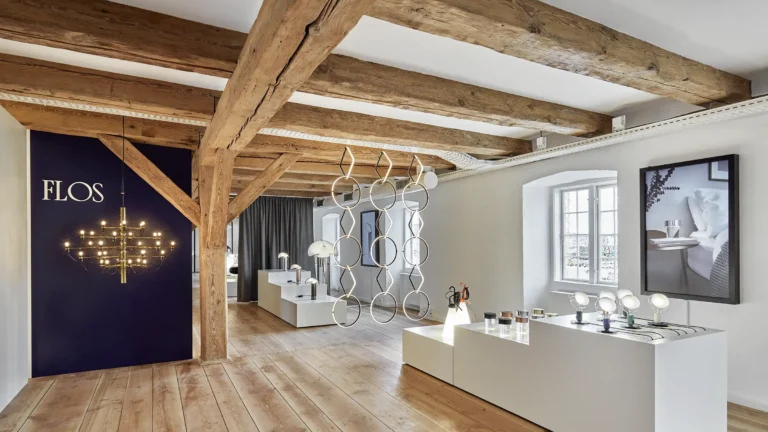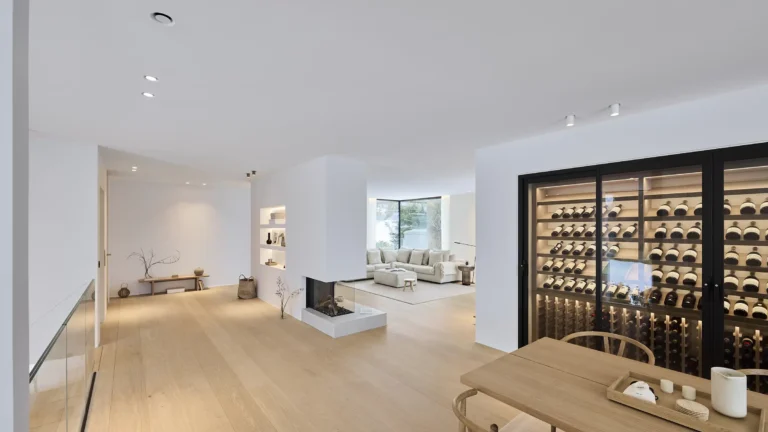

Acoustic plaster is a spray-applied, acoustically transparent plaster laid over sound-absorbing acoustic panels. The result is a ceiling with no visible joints that tames the reverberation markedly and looks like a classic plastered ceiling.
Acoustic plaster: a beautiful and effective route to better acoustics
What is acoustic plaster, and why do more and more people choose it in private homes and public buildings alike? In short, acoustic plaster is a surface treatment that combines acoustic function with a calm, seamless ceiling. At Hz Acoustic, Hz Acoustic Plaster is the finish on all four acoustic systems.
Good acoustics are about creating rooms where the sound feels comfortable. That happens when the reverberation is tamed instead of being thrown around between hard surfaces. In modern buildings with hard floors, large expanses of glass and open plans in particular, the need for sound control has grown, and here a plastered acoustic ceiling is a solution you hear but do not see.
What is acoustic plaster made of, and how does it work?
Acoustic plaster differs from ordinary plaster by being acoustically transparent. Ordinary plaster forms a dense, hard surface that throws the sound back into the room. Acoustic plaster is porous, so the sound waves pass through the surface and are absorbed in the acoustic panel behind – mineral wool, foam or perforated plasterboard, depending on the system.
That is why an acoustic ceiling must not be painted. Paint closes the pores in the plaster and reduces the sound absorption. If the ceiling is to be a colour other than white, the plaster itself is pigmented.
Hz Acoustic has three types of acoustic plaster:
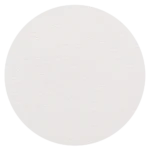
- Hz Acoustic Plaster 03 is cellulose fibre-based and sanded smooth, so the ceiling looks like a classic painted plasterboard ceiling.
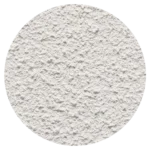
- Hz Acoustic Plaster 09 is made with recycled textile waste from a local laundry and stands with a homogeneous, textured surface.
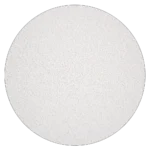
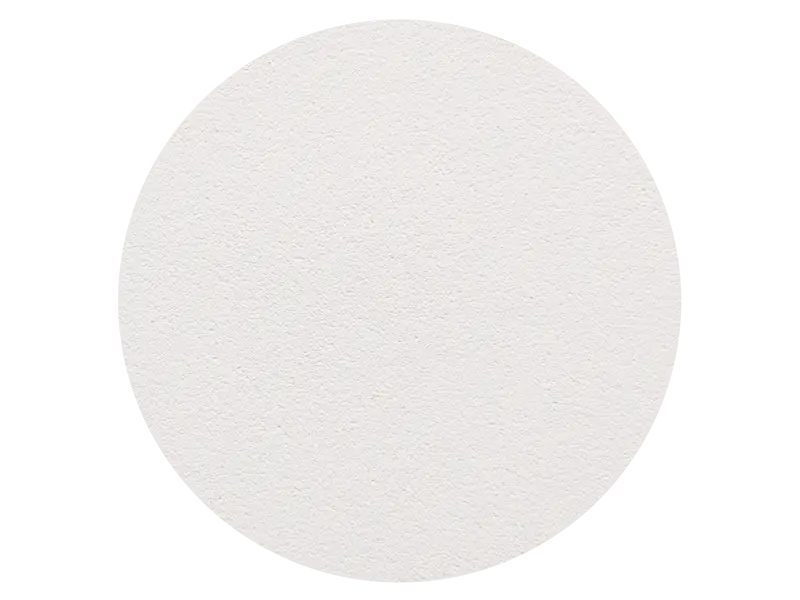
- Hz Acoustic Plaster C is mineral-based with a fine texture and is used for ceilings in colour and for refreshing existing ceilings.
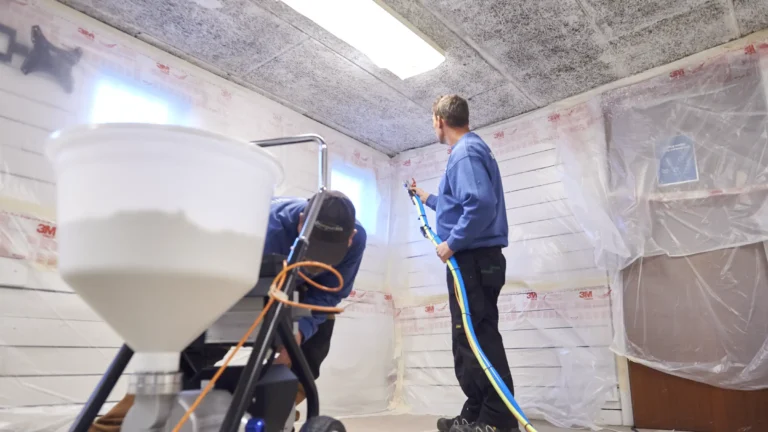
The plaster is sprayed on by our Hz Partners in two to three thin coats. The joints between the panels disappear under the plaster, so the ceiling stands with no visible joints, perforations or transitions.
The difference between Hz Acoustic Plaster 03, 09 and C
The choice is first of all about the look. Hz Acoustic Plaster 03 is for anyone who wants a completely smooth, minimalist ceiling with the focus on a clean, unbroken surface. Hz Acoustic Plaster 09 gives a more tactile look and has a lower consumption per m², so the same ceiling costs less. Hz Acoustic Plaster C is used when the ceiling is to have a colour, or when an existing acoustic ceiling is to be renewed.
All three give effective sound control. Technical data and data sheets are on the Hz Acoustic Plaster page.
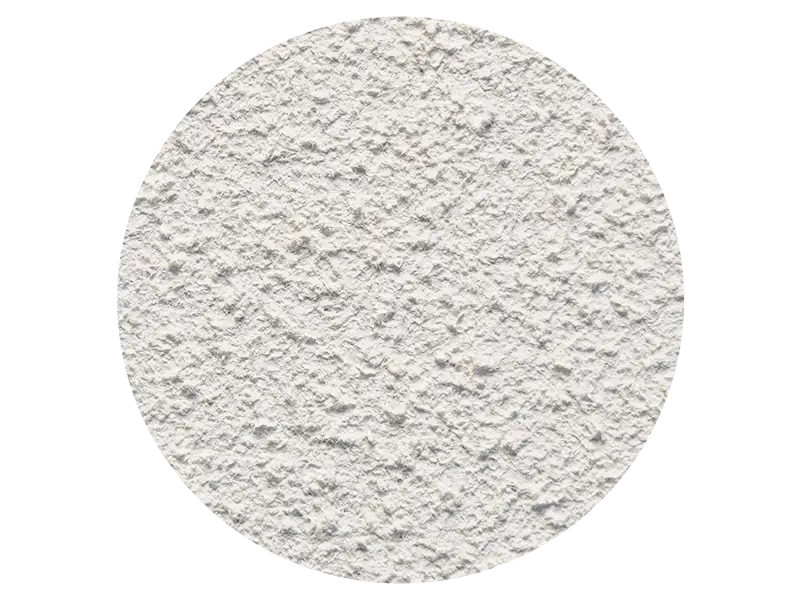
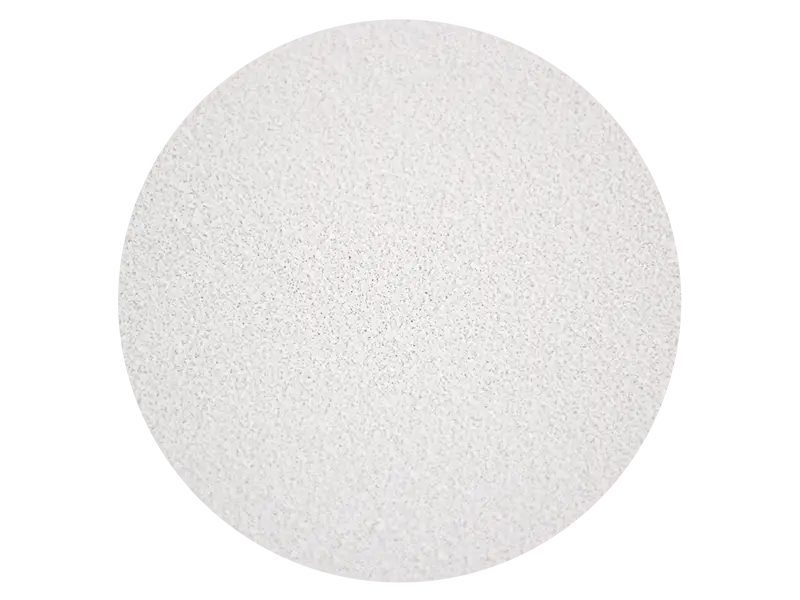
A ceiling without compromise
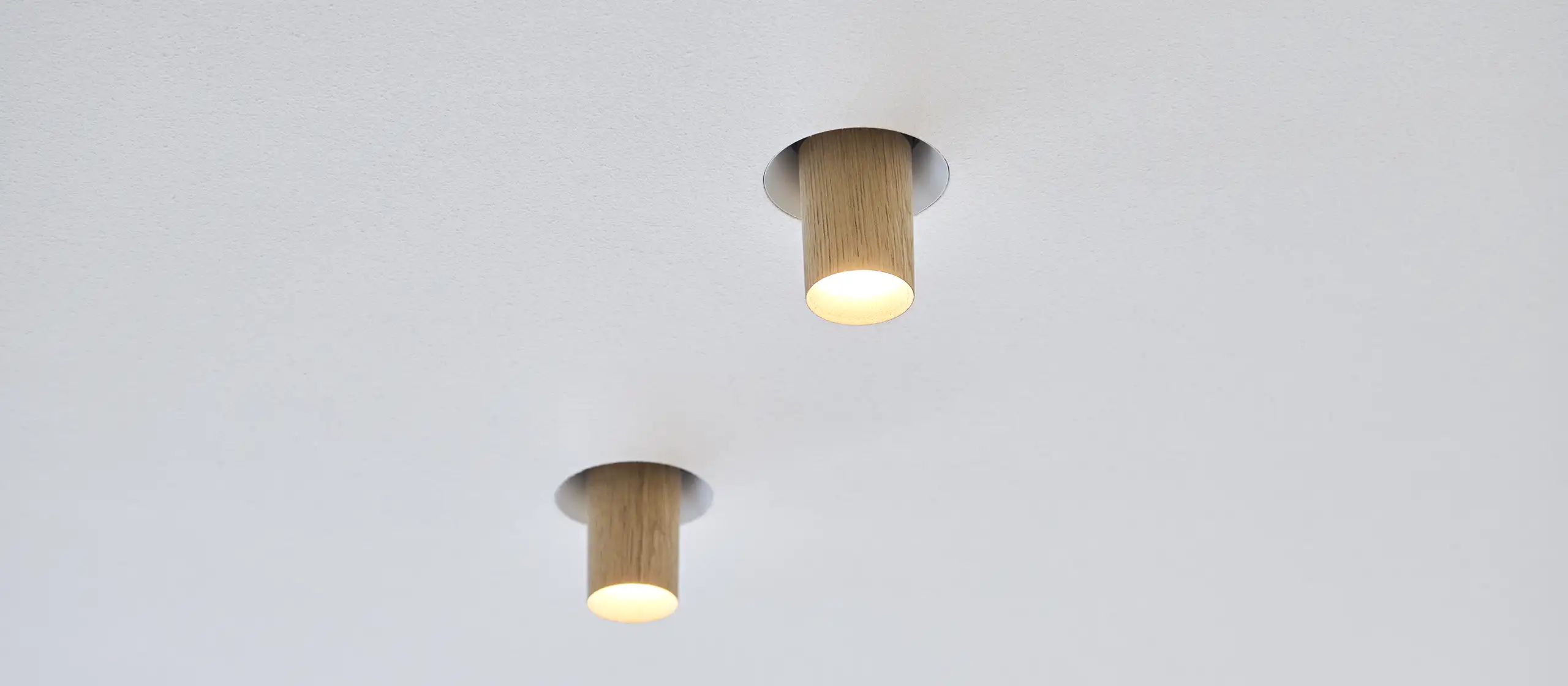
Many traditional acoustic solutions, such as perforated panels or wood wool, look technical and dominate the room. A plastered acoustic ceiling is a discreet alternative: an even, unbroken surface that gives calm. The ceiling becomes part of the architecture instead of something to hide away.
Acoustic plaster is also a craft, and the result depends on several things: the tools, the installer’s experience, the light and the orientation of the building. Where there are large expanses of glass or light falling from several angles, a slight shimmer can in rare cases appear in the surface. It is not a fault but an optical effect in the meeting between light and texture. The direction of the light and the position of the ceiling should therefore be considered as early as the design and quotation stage.
A fine finish with Hz Acoustic Plaster 03
In rooms with a lot of daylight, for instance with windows right up to the ceiling, an extra fine surface treatment can be an advantage. Here we offer a fine surface coating with Hz Acoustic Plaster 03: a thin, final treatment sprayed on with a hopper gun after the first coat has been sanded. The result is an ultra-fine surface that is even, matt and uniform – a little like the finest sandpaper.
The same method is used when an acoustic plaster ceiling that has been in use for some years is to be refreshed. A new application gives the ceiling new life without reducing its acoustic performance. If a darkened wood wool ceiling or an acoustic ceiling from another manufacturer is to be renewed, that is done with Hz Renovare.
Why choose acoustic plaster from Hz Acoustic
With acoustic plaster from Hz Acoustic you do not just get a surface, but a complete acoustic system where panel and plaster are developed for each other. We work closely with clients, architects and contractors, whether the project is a new-build home, the restoration of a listed house or the upgrading of an office. See examples in our projects.
Our Hz Partners are trained by us and work mainly with Hz acoustic systems. They assess the job and give you a quote with no obligation.
What is acoustic plaster? It is the finish that gives good acoustics without compromising the ceiling – a ceiling that is as pleasant to look at as it is to sit under.