
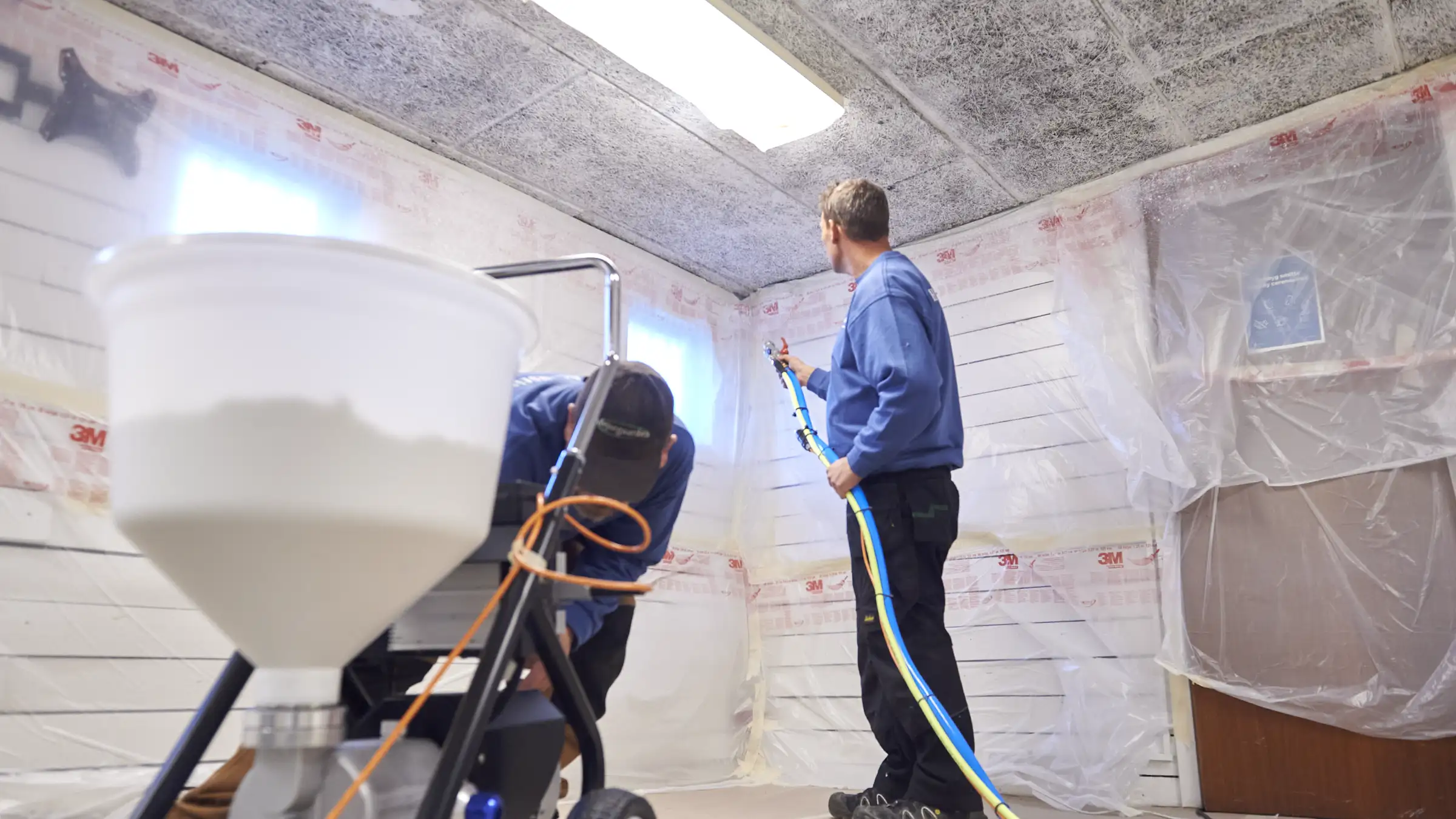
Wood wool ceilings have hung in Danish schools, institutions and homes for decades. Many of them have gone dark, grey and patchy. Here you can see why it happens, and which four solutions you can choose between.
Why does a wood wool ceiling go dark?
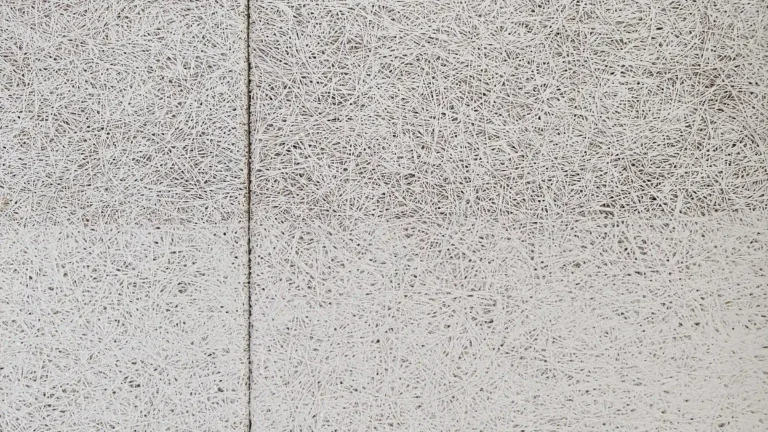
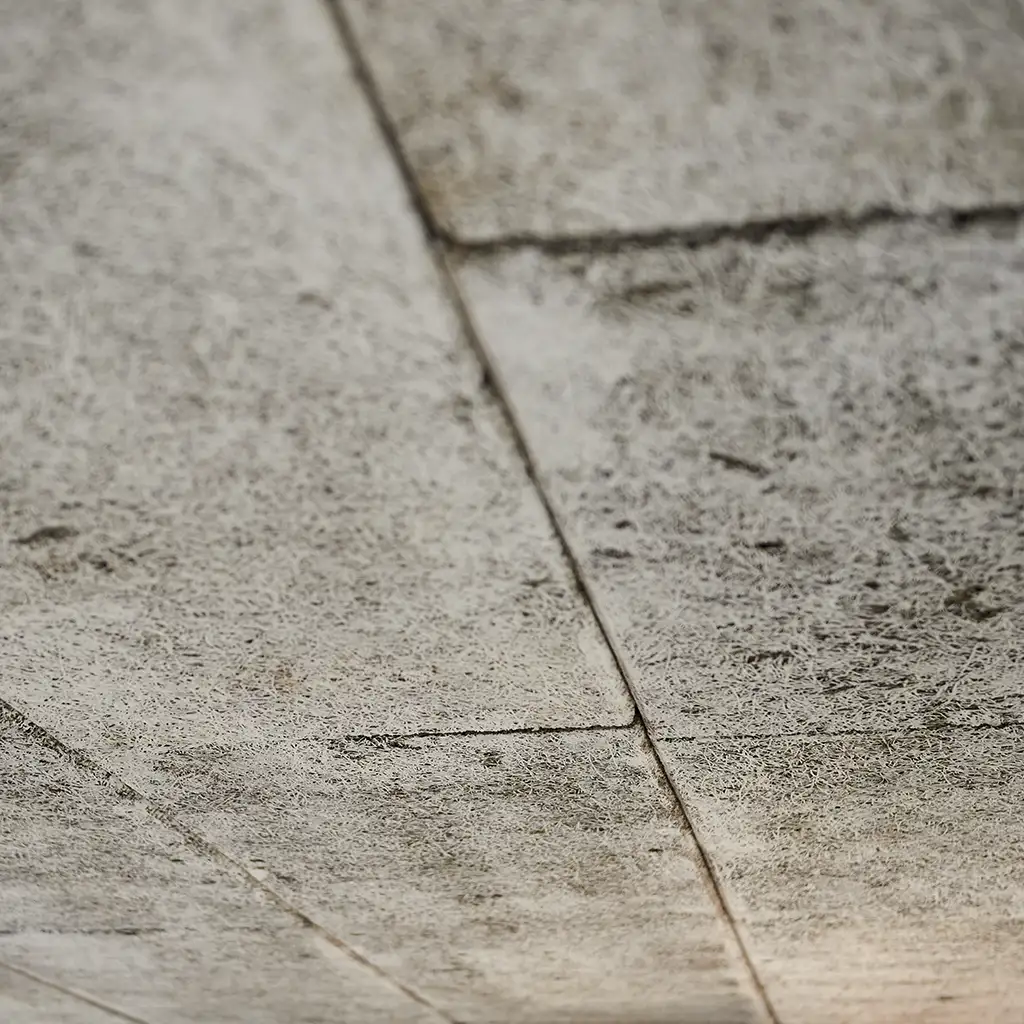
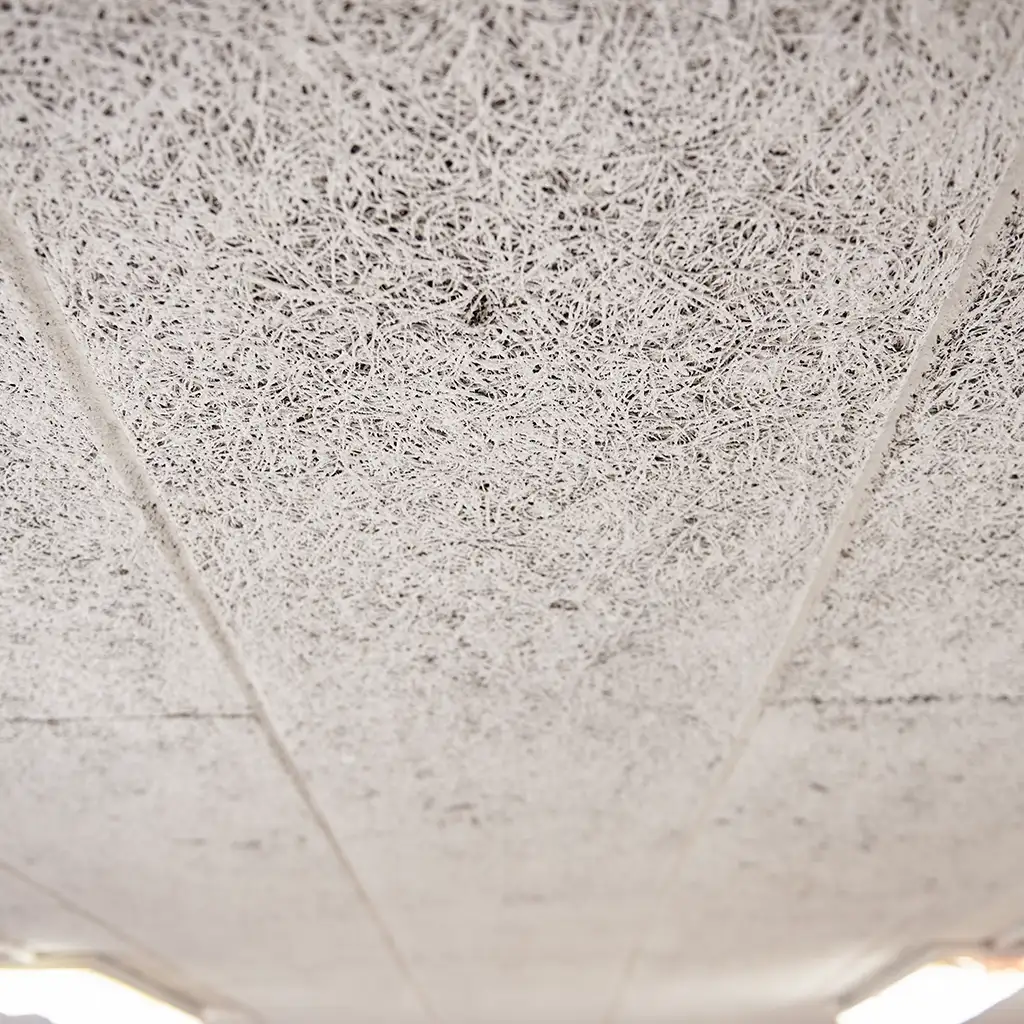
Wood wool, which many people know by the name Troldtekt, has a very open and rough surface, and that is exactly what gives the good acoustics. But over the years the ceiling also works almost as a filter. It collects dust, cooking fumes and particles from smoke and wood burners. The dirt settles deep in the texture of the panels, and the ceiling looks dark, grey and patchy.
The material itself is rarely the cause. Pale natural panels of wood wool and white cement tend instead to go slightly lighter or more yellow with time. Marked darkening is therefore almost always caused by dirt from outside, or by moisture.
If the discolouration is caused by moisture, for instance after water damage, the cause has to be found and put right before the ceiling is renovated. Otherwise the discolouration comes back.
Four solutions for a dark wood wool ceiling
1. Cleaning
Vacuum the ceiling with a brush attachment, and wipe it afterwards with a well-wrung cloth if necessary. That removes dust on the surface and is a good first step. Dirt sitting deep in the texture rarely comes out.
2. Painting
Wood wool can in theory be painted, but it is hard to do properly. If the panels get too much paint, the open texture is closed and the ceiling absorbs less sound. Paint also only gives a new colour. The coarse texture is the same, and it does not solve the problem if the panels have started to shed. Read more in Can you paint a wood wool ceiling?
3. Acoustic plaster straight onto the ceiling
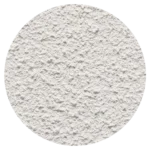
With Hz Renovare, an installer trained by us sprays Hz Acoustic Plaster 09 straight onto the existing wood wool ceiling. The ceiling stands white and even again with a homogeneous, textured surface, or it can take on a completely different colour, black for instance.
The ceiling does not have to come down, and there is no construction waste. The plaster is acoustically transparent, so the acoustics are kept, and measurements even show that the sound absorption improves slightly.
4. Replacement
You can also take the old ceiling down and put up a new one. That gives you a free hand, but means demolition, construction waste and a longer period where the room cannot be used. If the panels are in good condition, it is rarely necessary.
Which solution should you choose?
If the ceiling is merely dusty, start with a clean. If it is dark and patchy right into the texture, if the panels have started to shed, or if you want a calmer look, Hz Acoustic Plaster 09 is the solution that lifts it most. The ceiling does not have to come down, and the acoustics are kept.
If you would like your ceiling assessed, find an Hz Partner. They look at the ceiling and give you a quote with no obligation.