
Can you fit an acoustic ceiling over an existing ceiling? Yes, as a rule the acoustic panels can be glued or screwed straight onto the ceiling you already have, whether it is concrete, plasterboard or timber. The substrate decides which system suits, and how much ceiling height you have to give up.
A concrete ceiling – for instance in a new apartment
Many new apartments have bare concrete ceilings. They look good, but give hard acoustics where the sound is thrown around the room. A concrete ceiling is, on the other hand, a good substrate for an acoustic ceiling, because it is solid and level.
Here Hz Basic is glued straight onto the concrete. No battens are needed, and the panels come in 29 and 49 mm. The thicker panel gives the highest sound absorption.
If you want to keep as much ceiling height as possible, Hz Flex is the answer. The panel is only 20 mm, is also glued straight onto the concrete, and can follow curved surfaces.
A painted plasterboard ceiling
Hz Basic can also be glued onto an existing, painted plasterboard ceiling. The substrate simply has to be stable and able to hold adhesion. Loose or dirty surfaces are cleaned or primed before the panels go up.
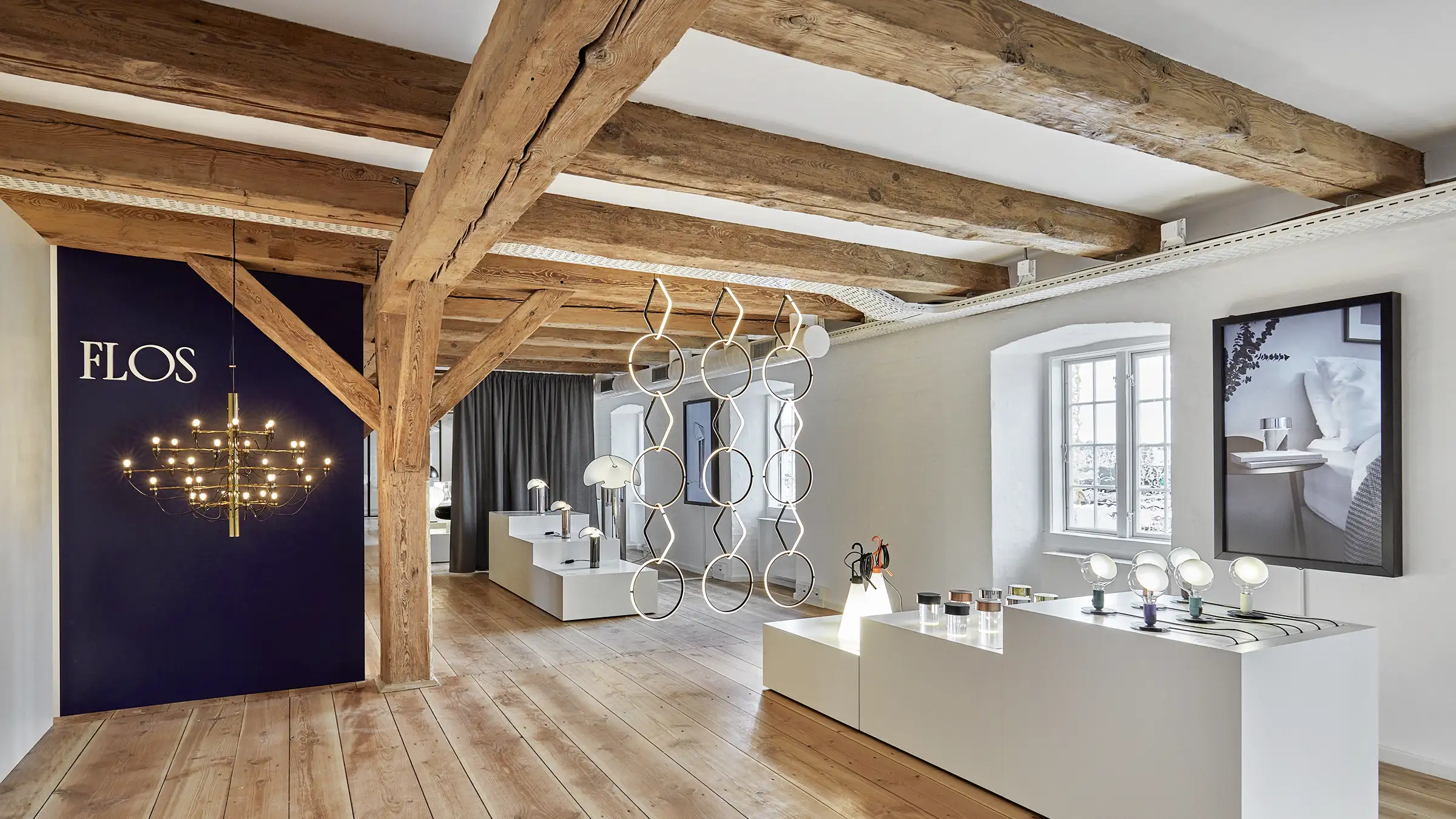
At Kuglegården on Holmen in Copenhagen, Hz Basic 001 is glued straight onto the plasterboard ceilings between the exposed beams. The whole build-up is around 32 mm, so the beams stand out just as clearly as before.
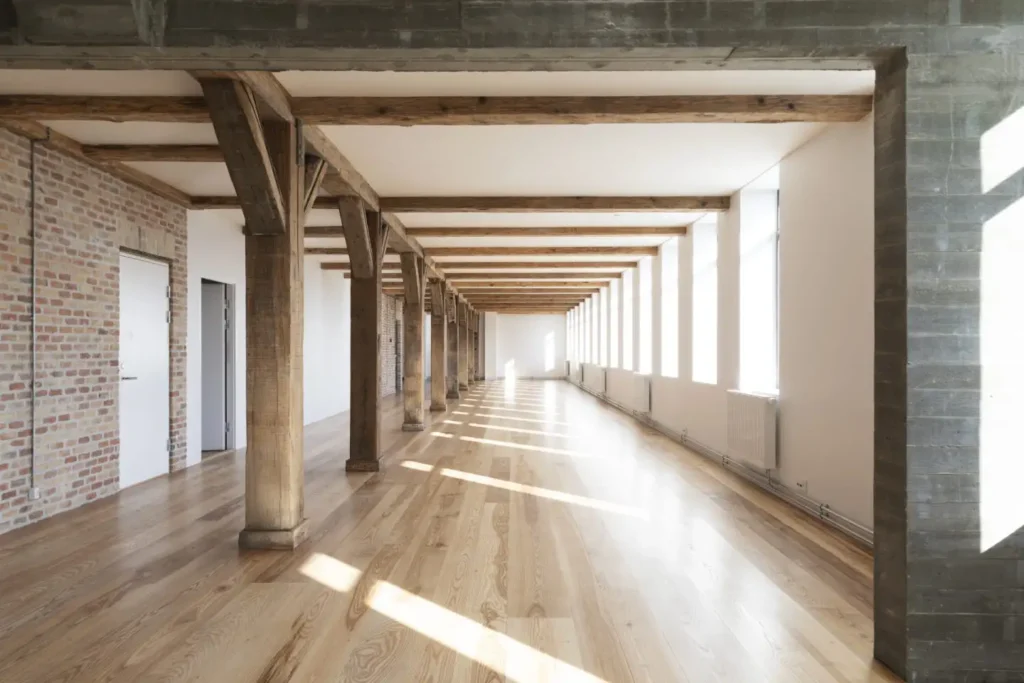
A timber ceiling
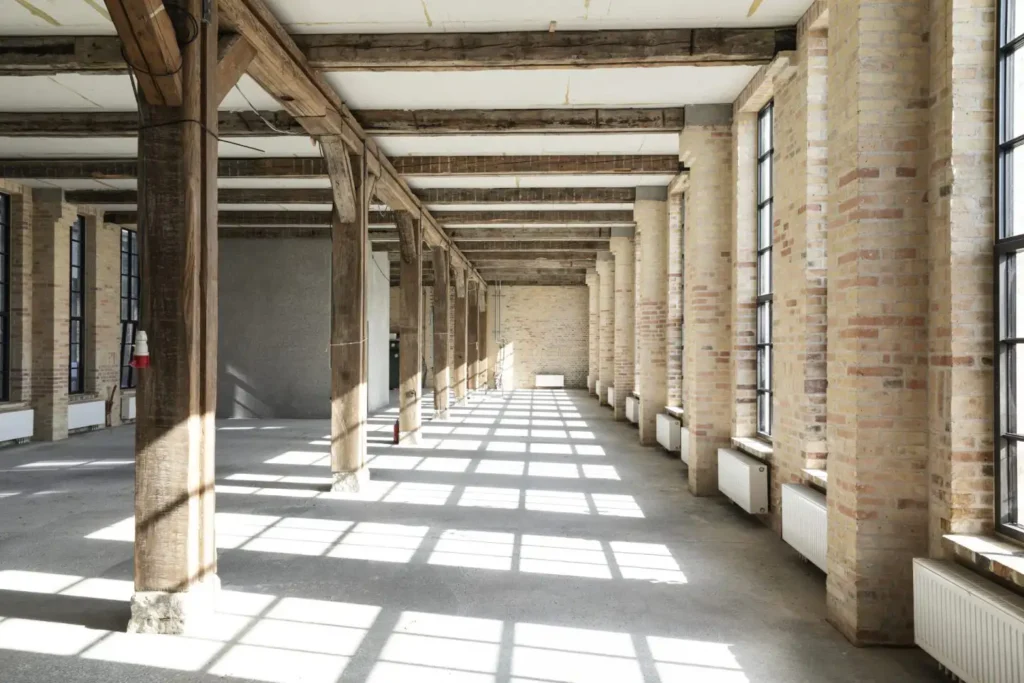
If you have a timber ceiling, Hz Dual can be screwed onto it. The panels are fixed through pre-drilled holes and come, like Hz Basic, in 29 and 49 mm.
What matters is that the timber ceiling is properly fixed, so it can carry both panels and plaster. The substrate has to carry 20 kg/m² with Hz Basic and Hz Dual, and 10 kg/m² with Hz Flex. If you are in doubt, have it assessed before the work starts.
Take the timber ceiling down and reuse the battens
In some cases it pays to take the existing timber ceiling down and reuse the battens. They can carry Hz Plus or Hz Dual.
Hz Plus is a perforated plasterboard with acoustic fleece, which the carpenter screws onto the battens, just as with a traditional plasterboard ceiling. The panels need battens at 300 mm centres, so the existing battens may have to be added to.
How much ceiling height do you lose?
- Hz Flex: around 20 mm
- Hz Basic and Hz Dual: 29 or 49 mm
- Hz Plus: 12.5 mm plus the battens
On top of that comes the acoustic plaster at 1–2 mm. The plaster gives all four systems the same smooth, seamless ceiling to look at.
Do you have a wood wool ceiling?
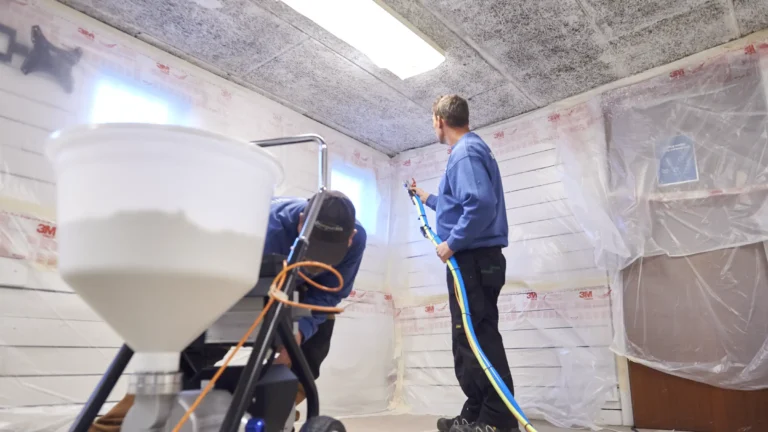
If the existing ceiling is a wood wool ceiling that has darkened or worn, new panels are not necessarily needed. With Hz Renovare, Hz Acoustic Plaster 09 is sprayed straight onto the wood wool, so the ceiling is renewed without being taken down. Read more in A dark wood wool ceiling – what can you do?
Which system suits your ceiling?
The substrate decides the choice, but ceiling height, the acoustics you want and built-in fittings such as spotlights also play a part. See what the different solutions cost in What does an acoustic ceiling cost?, or find an Hz Partner who can assess your ceiling and give you a quote with no obligation.